
Biodegradable vs Compostable vs Recyclable Explained
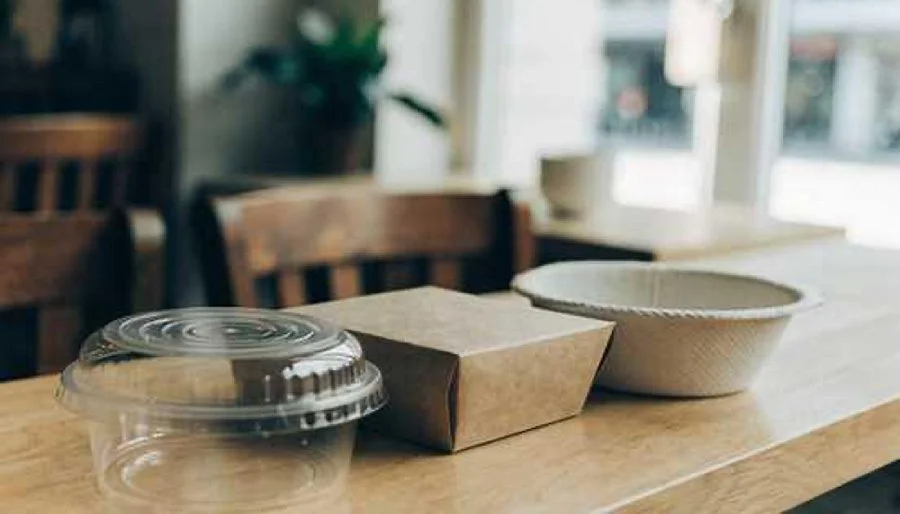
Ask five customers what eco-friendly packaging means and you will probably get five different answers. Ask five suppliers and the answers may not be much tidier. Biodegradable, compostable and recyclable get printed on boxes and repeated in sales pitches as though they are the same idea wearing different hats, which is how a well-meaning food business ends up making a claim it cannot back up at the counter.
Getting the vocabulary straight is one of the more useful hours an F&B business can spend. Once you know what each word actually promises, picking sustainable food packaging turns into a practical decision about your menu, your customers and where the container ends up, and you can answer questions honestly without hedging.
Biodegradable means microbes can break it down
Biodegradable describes a material that microbes can break down over time. Bacteria and fungi do the work, and the material eventually returns to simpler substances in the environment.
What the term does not tell you is how fast that happens or under what conditions, and that is the gap most people miss. A biodegradable label says the process is possible, not that it happens quickly, and not that it happens in any particular bin. So when a supplier tells you something is biodegradable, the useful follow-up question is what makes it biodegradable. The answer should point to a specific material or additive.
Compostable is a stricter promise than it sounds
Compostable goes further. A compostable material breaks down into non-toxic components within a defined timeframe, under specific composting conditions. Most of the time those conditions mean industrial composting, with controlled heat, moisture and airflow that a bin behind your shop cannot replicate.
This is where good intentions quietly come apart. Singapore has limited industrial composting capacity for consumer packaging, so a compostable container that leaves with a customer's lunch is very likely heading into the same waste stream as everything else. The material is genuinely compostable. The disposal pathway simply is not there for most people yet.
None of that makes compostable packaging a poor choice, and plenty of caterers use it well at events where waste gets collected in one place. It does mean you should be careful about how you describe it. Telling a customer their container will compost is only true if that container actually reaches a facility able to compost it.
Recyclable is about systems, not decomposition
Recyclable is the odd one out, because it has nothing to do with breaking down at all. A recyclable material can be reprocessed into new products through existing recycling systems, which makes it a question of infrastructure and cleanliness as much as chemistry. Food residue is the usual spoiler. A greasy container tossed into a blue bin can contaminate a whole load, and plastics sit stubbornly near the bottom of Singapore's annual waste and recycling figures year after year, partly for that reason.
Where EcoVue fits into the picture
Our own EcoVue range is a good example of why the distinction is useful, because people often file it in the wrong drawer. EcoVue is made from food-grade polypropylene blended with a biodegradable additive, using BioTransformation technology. The additive allows microbes to break the plastic down faster than conventional plastic once it has been discarded, while the container still behaves like the plastic you already rely on: food grade, microwave-oven safe and recyclable.
EcoVue is biodegradable. Compostable is a separate claim with a much stricter meaning, and we do not make it.
For a food business serving hot soup, curry or anything with gravy, that middle ground is the entire point. You keep the heat resistance and leak resistance that paper struggles with, without settling for standard plastic and hoping nobody asks.
Five questions before you switch
Before committing to a new range, run through a short set of questions with your supplier and with your own menu in mind.
What exactly is the material, and what makes it biodegradable, compostable or recyclable?
What food is going into it, and how hot or wet is that food when it goes in?
Will customers reheat the container at home, and can it take that?
Where will the packaging realistically end up after the meal?
What claim are you comfortable defending if a regular asks you about it?
That last one tends to be the most revealing. If you cannot explain the answer in a sentence at the counter, the packaging is probably not the right fit yet.
Suppliers who know their products will not mind these questions at all. We field them every week, and the businesses that ask them tend to be the ones still happy with their choice a year later.
Paper is not an automatic upgrade
There is a common shortcut where paper gets treated as the green option and plastic as the villain. Reality is messier. Paper packaging built for liquids or hot food usually needs a plastic or wax lining to stop it going soft, and that lining can complicate recycling at the other end. Paper also carries a real manufacturing footprint of its own, from pulping to transport.
We have unpacked some of the misconceptions surrounding paper food packaging elsewhere on the blog, and the short version is that the right material depends on what you are packing. A dry pastry and a bowl of laksa are not the same problem, and no single material solves both.
Most food businesses end up with a mix, which is a perfectly sensible outcome. Kraft boxes for dry items, a heat-resistant plastic for anything with gravy, and a clear container where customers want to see what they bought.
Getting the words right is good business
Sorting out these three terms does more for a food business than any label ever will. It lets you buy with confidence, describe your packaging accurately, and avoid the kind of overclaim that comes back to bite when a customer knows more than you do.
If you are weighing up options for your own menu, come and talk to us at SKP. As Singapore's largest supplier of disposable food packaging, we would much rather help you find something that suits your food and your budget than sell you a label.